
What's Happening
Stay Connected
Receive the latest news, grant offerings, and community events.

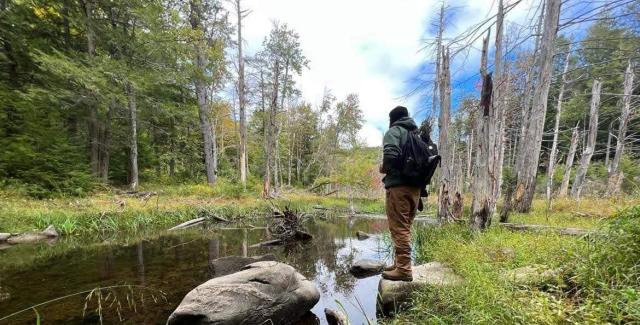
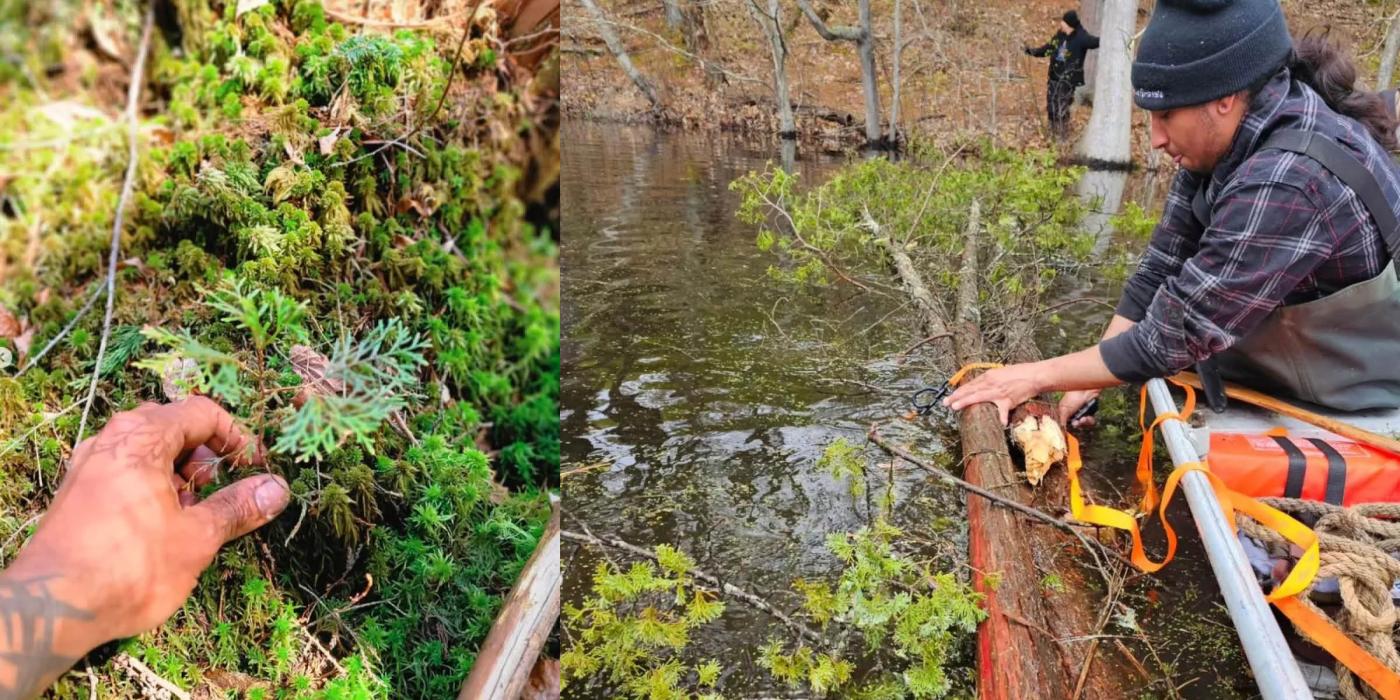
Cedar Swamp Harvest, Natick, MA | photo courtesy of No Loose Braids
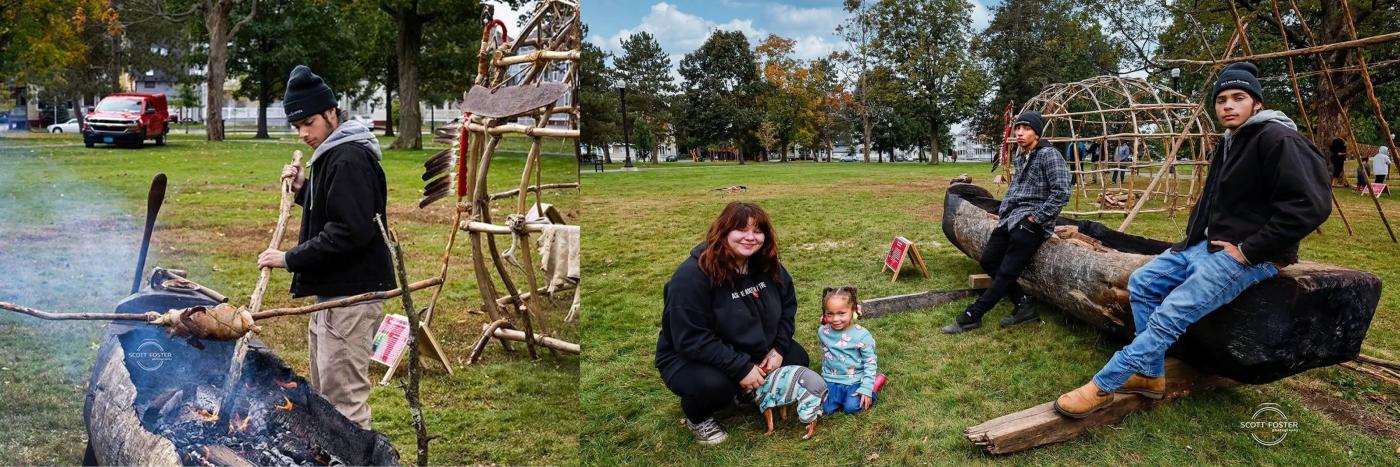
In the Artist Voices series, NEFA connects with grantees to learn more about the impact of the grant on their work. Andre StrongBearHeart is an enrolled cultural steward, traditional artist, and land steward who serves as Tribal Historic Preservation Officer for the Hassanamisco Nipmuc Nation. With a Public Art for Spatial Justice (PASJ) grant, Andre and his organization, No Loose Braids, brought a traditional Nipmuc homesite to Elm Park in downtown Worcester, MA. The site included a wetu (traditional home), a mishoon (dugout canoe), fish nets, and brain-tanned hides.
Over the past year, Arts Equity Group has been reading five years of grantee reports and speaking with artists to understand the impact of NEFA’s public art programs. Again and again, the deepest impacts we found were about connection to ancestors, spiritual health and wellbeing, and cultural memory restored. Andre’s story shows how far those ripples can travel: back through the elders and teachers who carried this knowledge, and forward to the next seven generations. In this conversation, we unpack what generational impact looks like.
DA: Let’s start at the beginning. Tell us a little about yourself and the teachers who shaped your practice.
AS: I’m from the Nipmuc Tribe, and I’ve been walking with our cultural practices 19 years now. I grew up on the Cape and South Shore where I was lucky to see what our cultural way of living was like by our sister tribe of the Wampanoags. It wasn’t until I came back into my father’s territory in Worcester that I began to learn our ways as Nipmuc people.
When I became ready to walk my red road, doorways opened up. I started tanning hides, working on paddles, and working on wampum makers alongside artists like Hartman Deetz, a Mashpee Wampanoag. I became one of Hartman's apprentices who taught me how to refine my wampum work. Darius Coombs, another Mashpee Wampanoag, helped me understand what it means to burn out dugout canoes (mishoonash) while I was at their Mashpee Wampanoag Government Center teaching their youth how to braintan deer skins.
DA: When you started asking your elders about cultural practices on Nipmuc land, what happened?
AS: I had asked my elders, like my Father, my great aunt Marci Manog-Roberson, cousin Johnny Blackwolf Walker, David Tall Pine white, Fred Freeman, Millie McCowan, and Strong Eagle Daily, When’s the last time you saw a dugout canoe burnt out by our community?
Nobody could give me a defined answer. It was that long.
Then I asked, when’s the last time anybody has seen a traditional home in our territory?
They couldn’t give me that answer either.
A fire had lit in me. Our people don’t have a Nipmuc home standing in Nipmuc territory. That started to deeply impact me.
DA: Why did you bring your PASJ project to Elm Park in downtown Worcester, and what did it take?
AS: Worcester is the most central place in Nipmuc territory, with what I believe the largest Nipmuc population alongside Springfield. We wanted to light a mishoon, and this was the first time a mishoon got lit in Worcester in generations. There are city ordinances; you can’t have fires. And it’s like, no, actually, we stewarded fire here for thousands of years. Yeah, we can. So we had to jump through all this red tape to be who we are.
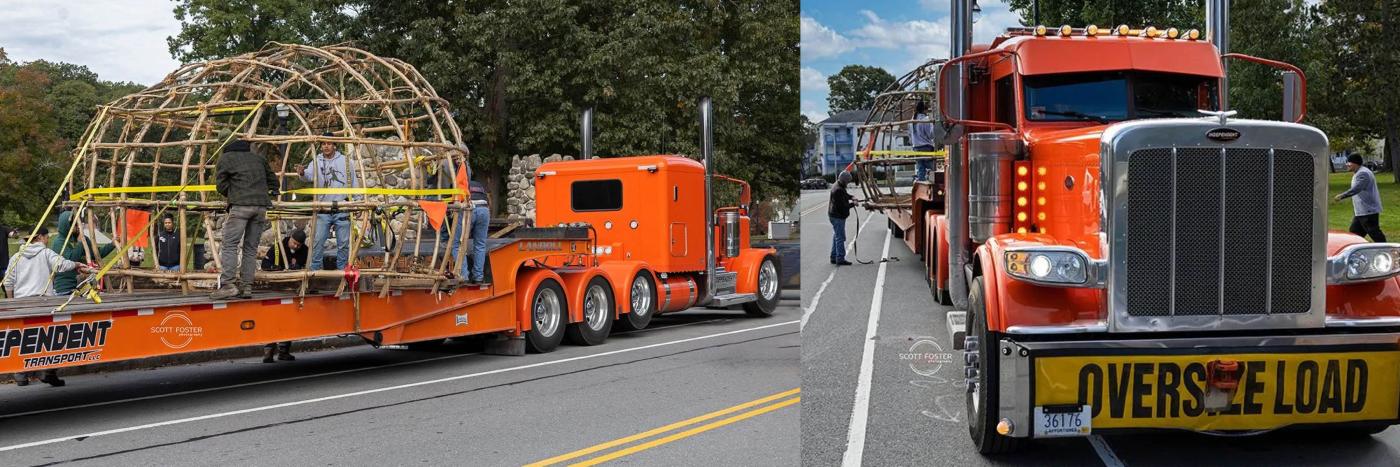
The home couldn’t be permanent, so for the first time ever, we built a mobile traditional home. Nobody had ever taught me how. That was spirit-driven work. We built it in a field, cut it from the ground, and a whole group of us lifted it onto an 18-wheeler flatbed. It literally drove through Kelley Square. That was wild.
Nipmuc folks from all of our bands came, Mohegan folks, Chappaquiddick Wampanoag folks, Ramapo community, Taíno folks. There was an awakening there that was really beautiful. I would go through all of it again to have our people have that moment of clarity. But I don’t want to have to go through it in that way.
DA: What did the gathering mean for the people who came?
AS: We had traditional foods, flute players, drummers, tribal dignitaries and elders sharing their voices. No Loose Braids means weaving our communities, our culture, and our language back together. When colonization came here, they cut our braids and outlawed our language after the 1675 king Phillip war. So, no: grow your hair, grow it strong, weave it all back together.
We survived here for thousands of years because we lived in relationship with the land and our sister tribes.
In our language, we say tookish. It means to wake up.
Assimilation puts a blanket over our eyes. We do the 9 to 5, year after year, and we go into this robotic way of living. But when we create a space like this, people have a moment to tookish.
It lights a fire in them: Whoa. This is who we are here. That’s how our homes were built. We didn’t have cars; we had dugout canoes. That’s what a flute sounds like. And this is my people.
It’s also really important for public education. You know how many people tell most of us eastern woodland Indigenous, “Well, you don’t look like an Indian.”
Do you know our language, our creation stories, our relationship to land along with the story of resilience for us to still be here?!
If not, don’t tell us what we look like.
Those who want to learn will be able to have these conversations in a good way.
DA: Your elders couldn’t remember the last dugout canoe or traditional home in Nipmuc territory. Did you set out to replant that memory?
AS: No, definitely not. I just knew that it hadn’t happened.
My Aunt Marcy Roberson, our family’s clan mother, is in her 80s. Until the American Indian Religious Freedom Act in 1978, we couldn’t legally pray and have ceremony. My dad, as a teenager, wasn’t legally allowed to do ceremonies like we do today. So, to have my clan mother put her hands on a dugout canoe in the middle of Worcester, not far from Charlestown, where they used to put our people’s heads on pikes, holds such a depth. You can’t comprehend it in the middle of the project. It takes time to realize what’s happening.
DA: You described exercising your treaty rights to harvest the cedar. What does it take to actually use those rights?
AS: Non-indigenous person society is most cautious about an Indigenous person who understands their treaty rights and understands how to live in relationship with the land. I’ve been lucky to learn from elders like Pam Ellis and want to uplift her words.
Everything we’re sharing is passed lessons and knowledge of life's experiences. That’s why I name the teachers who showed me how to live our traditional way. We have to speak about that, or the work isn’t done in a good way.
Three years ago, we were harvesting cedar poles in Natick. A sergeant told us we were trespassing and tried to arrest us.
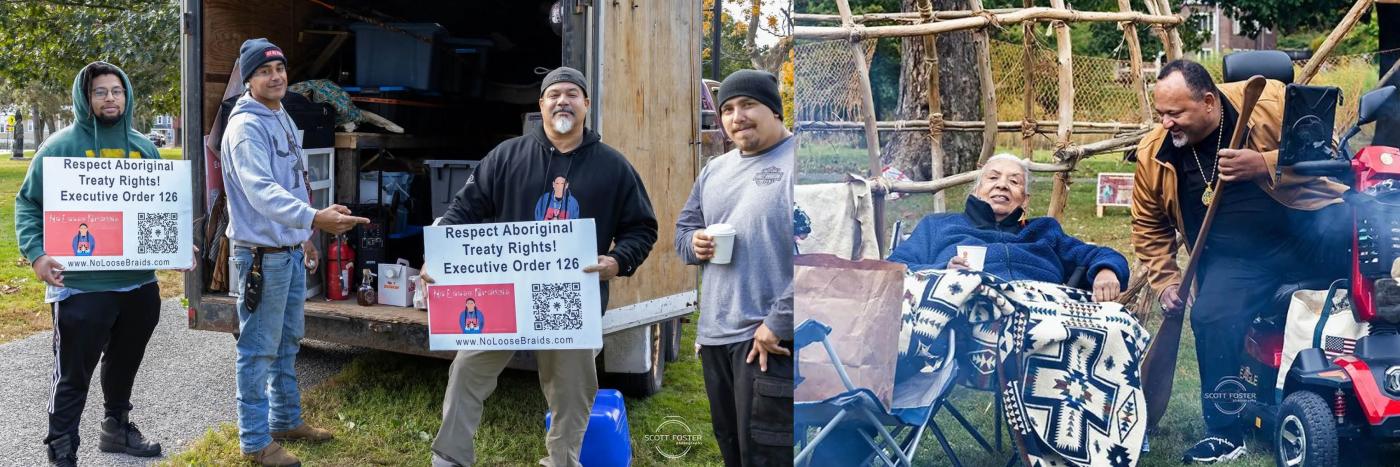
I had to assert our treaty rights from the 1726 Treaty of Falmouth. But it’s important to remember that the treaty doesn’t give us the right.
It speaks to the settlers who are here now, and it speaks to our inherent right to hunt, fish, and gather since time immemorial.
To interfere with that is to get in the way of an inherent right.
Now we do a lot of education with environmental police, regular police, MassWildlife, and DCR.
I’m big on systems change. I don’t do projects that are just, “Oh, hey, we went and did this project in the park.” We did this to create a blueprint for the next Indigenous person who wants to do it, so hopefully they don’t have to jump through so many hoops.
The hope in our work is that the next seven generations don’t have to go through what we’re going through.
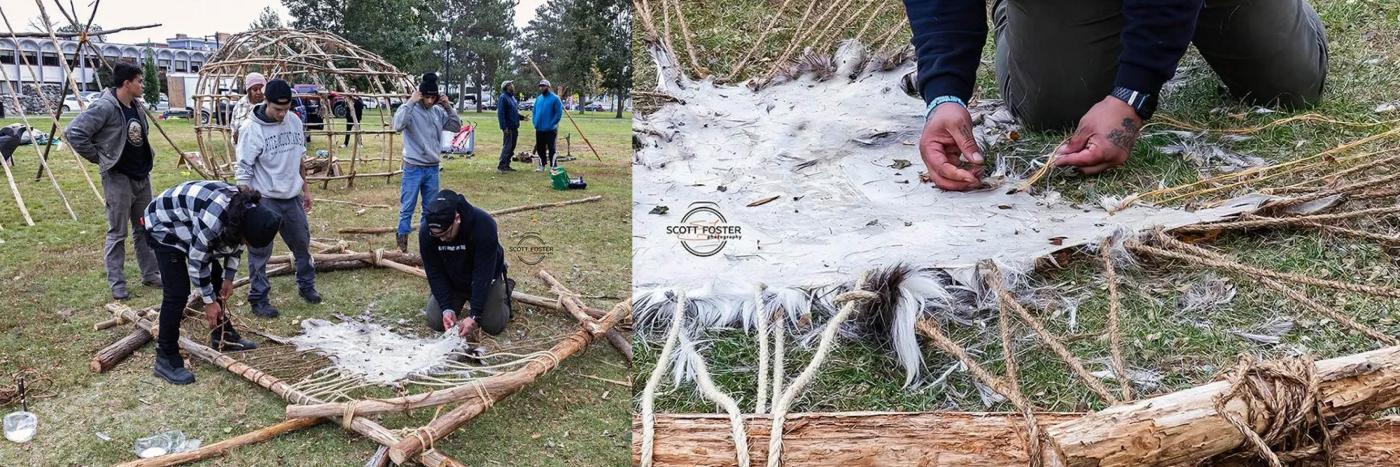
DA: The project put the cedar swamps in the public eye in a new way. Has anything changed since?
AS: We put signs around the whole park to talk about the health of our cedar swamps and what it means for us to be land stewards in our own homelands. It’s an ecological problem that affects everybody here. We have to live together in a better way now, in relationship to each other.
That’s why we created a cohort with MassWildlife, DCR, UMass Amherst, and hydrologists and geologists, along with Indigenous stewards like No Loose Braids and Pam Ellis. With the Town of Monson and its Conservation Commission, we got a Municipal Vulnerability Preparedness grant, and we’re bringing together scientists and traditional ecological knowledge to restore cedar swamps throughout Nipmuc homelands.
Harvesting cedar for the homes started that work; the public art element kept it visible.
DA: Have you seen those systems start to shift?
AS: After our mishoon burn at Elm Park, there was another at Quinsigamond. I didn’t set that one up, but I’m pretty sure our work made it a lot easier for them.
In Worcester, those systems are so ingrained that what I did barely chipped away at them. But it’s a start.
These projects, if funded well, can be done with great intentions and could help many to collaborate for cultural revitalization. Yet very little money ever goes to cultural survival.
I’ve been awarded grants that I didn’t continue to pursue because they felt extractive. I didn’t feel that way with NEFA, and I want to say that out loud. But in general, it doesn’t feel good to need support to get grants to be who we are on our ancestral lands. The balance of living in two worlds.
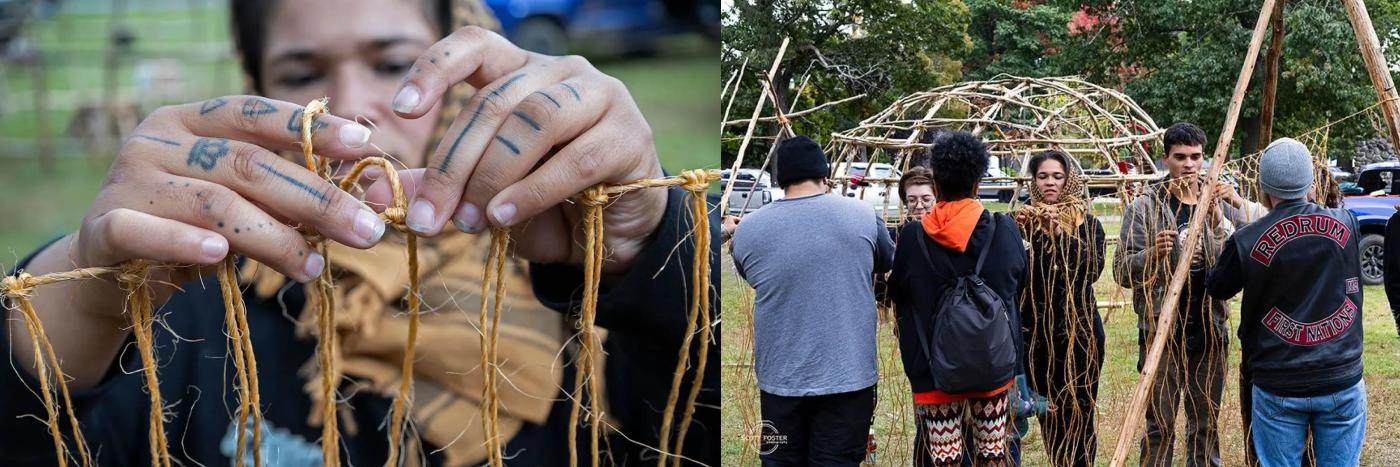
DA: What’s grown out of the project, and what are you building now?
AS: By working on this project, along with the various other projects we have going on, we acknowledged that our people shouldn’t only be able to experience culture through a grant process and a temporary project. They should have a cultural center they can come home to.
So, since we completed the project, we fundraised to buy 17 acres in Ashfield for our first Nipmuc Community Center. This will be a place where ALL Nipmuc are free to come and gather. We are also dedicated to welcoming the public to the site for volunteer days. Double Edge Theatre, who we’d been in relationship with for about six years, made an agreement to do a part sale- part donation for the land. That was really intentional and relational, and it created a different sense of hope for our community.
It was a hay barn with no electricity, water, or septic. We’re now in phase two of the build-out, and when we raise funds, we’ll start framing so residencies can happen and elders and young people have a place to be. There’s already a traditional house there. Whenever we harvest cedar, we harvest seeds too, and we’ve planted 180 Atlantic white cedars on the land this past year! It’s our duty to replant and tend to the land in a good way as it takes care of us.
Our people have been forced into the city, looking at concrete every day. I want to give our community a chance to be in the forest. I want them to be able to harvest fiddleheads, tap maple trees, and drink spring water.
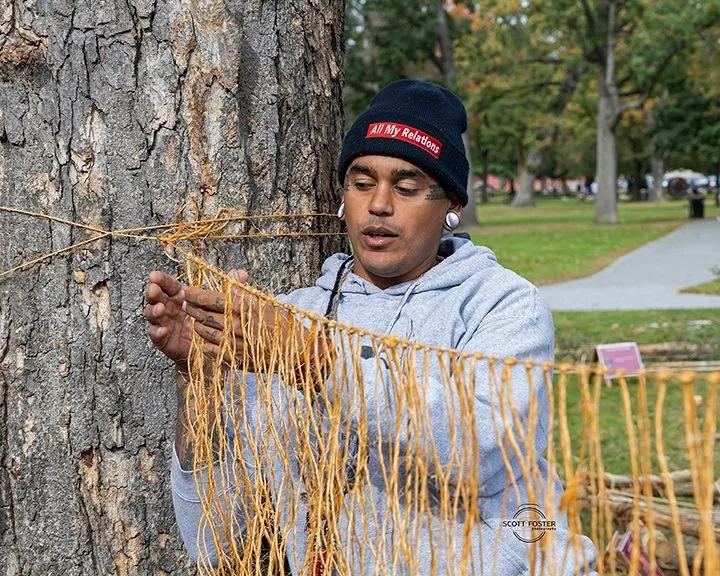
DA: You’ve said this work can feel thankless. What sustains you?
AS: Everybody in my community who does this work will tell you: the taller you stand up, the more rocks get thrown at you. You have to have thick skin. You’re going against colonial constructs, against the divide-and-conquer mentality that assimilation created between our communities, against rules, regulations, and bureaucracy. But in doing that, there are deep impacts that can actually change policies and law.
What helps me is sitting with my elders and listening to what they’ve gone through. It’s easy to get caught up in our own lives, but they give you a broader perspective: this is just part of it. Along with our traditional way of life, being who I am here, and going against the grain, helps create balance and keeps me going.
To learn more about Andre’s work, subscribe to their quarterly newsletter, and support the Nipmuc Community Center, visit NoLooseBraids.com. WWW.NIPMUCNATION.ORG
Receive the latest news, grant offerings, and community events.