What's Happening
Stay Connected
Receive the latest news, grant offerings, and community events.
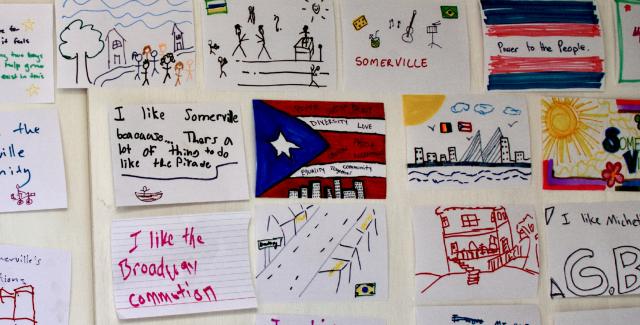
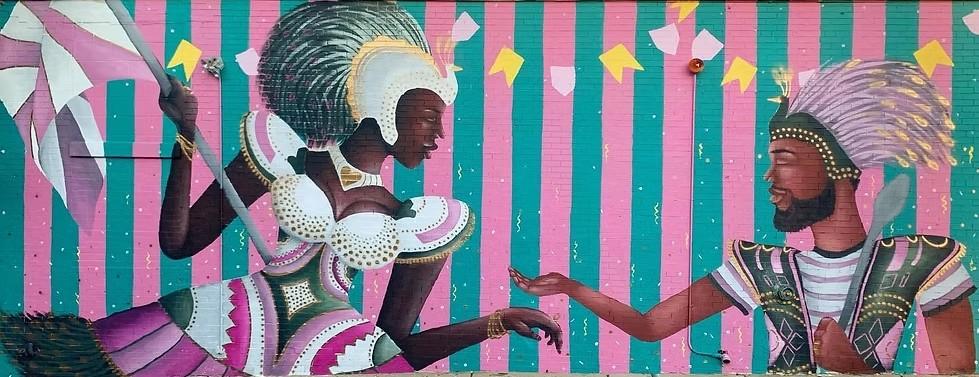
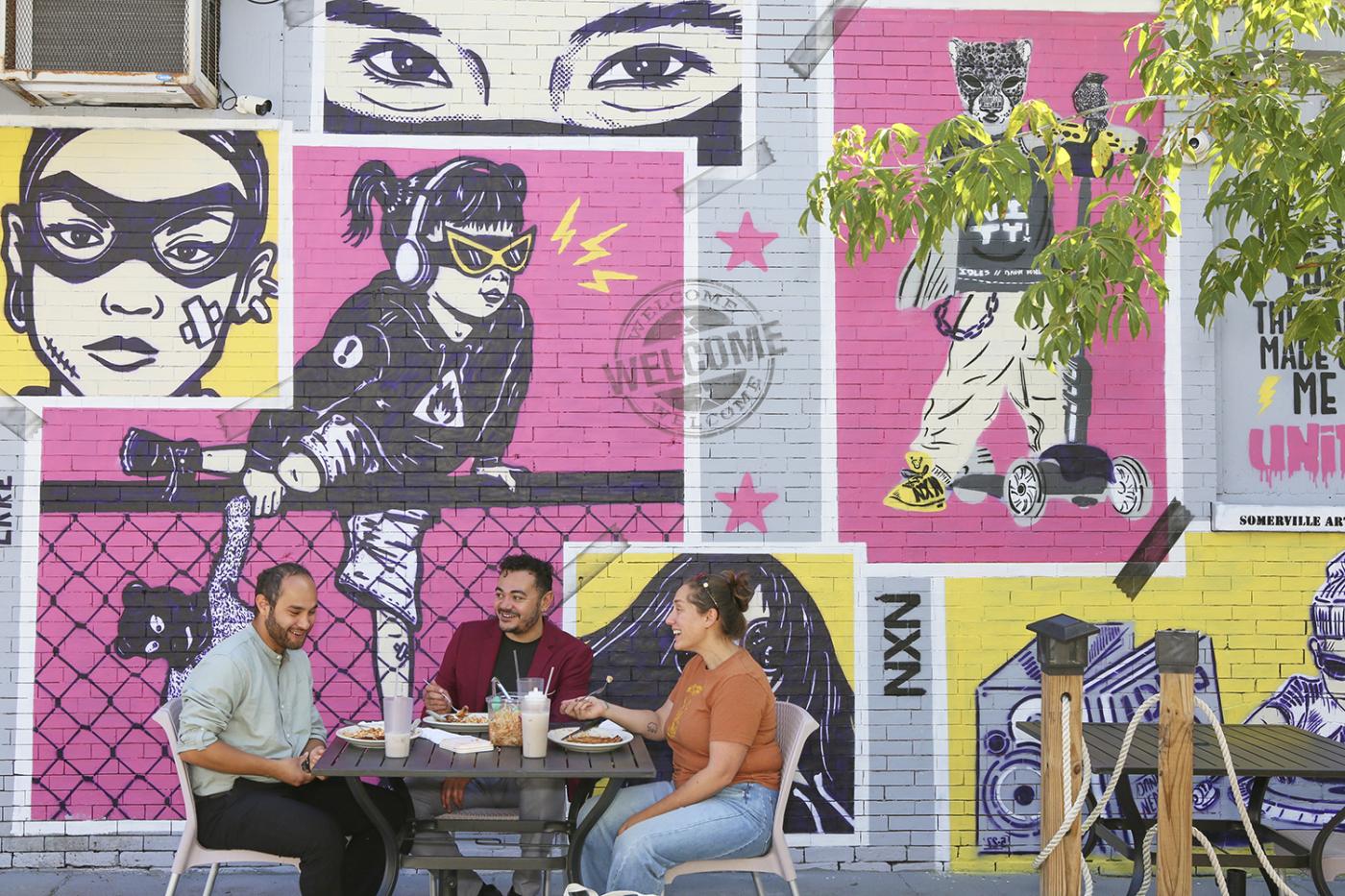
35% of the East Somerville neighborhood is populated by immigrants, including significant numbers of Portuguese, Brazilian, Haitian, Latin American, and Asian communities. This fact is visible walking down Broadway with the diversity of restaurants, stores, music and murals it offers. Art is the other proof of it. For instance, Roda da Pátria’s mural depicts a Brazilian samba circle. La Salvadoreña stands as a representation of the resilience of the Central American community and building life far away from home. Buenos Días portrays a table full of fruits and vegetables familiar in Latin American cuisine. Between these murals, there are restaurants making Broadway feel like traveling without a passport.
But visibility is not the same as belonging. A mural can represent a culture without the person walking past it feeling like the space itself is theirs. That distinction is what stayed with me when I first read about NEFA's Public Art for Spatial Justice grant: what is space? What would it mean to bring justice to it?
There is no one answer to that question, depending on the perspective one uses to understand space. In urbanism, space is where daily life takes place. In art, it is an area within and surrounding a work of art. Historically, spaces carry relationships, memories, and power. For me, space holds your history and your memories.
I am an immigrant myself. So, I understand this strange feeling of love for the place where you live and, at the same time, some uncertainty whether it is your place. It is a place where you built your life, learned the streets and created memories. But somehow it stays distant.
Through my work in East Somerville Main Streets, I met people deeply connected to their neighborhood and communities, but uncertain about their connection to the surrounding space. And I came to the next question: how do you discuss belonging to a place with a person whose memories began elsewhere and whose future is being built here?
When we started looking for an artist to work with, we met Colombian artist Andrés Duarte. Discussing immigration, art, memories, and our own experiences, we developed an understanding: we did not want to teach people the history of the neighborhood or show them how to feel belonging to it. Instead, we wanted to create the conditions for people to tell it themselves. Rather than telling the community's story, the project created opportunities for the community to tell its own. We wanted to ask questions about the past, present, and future.
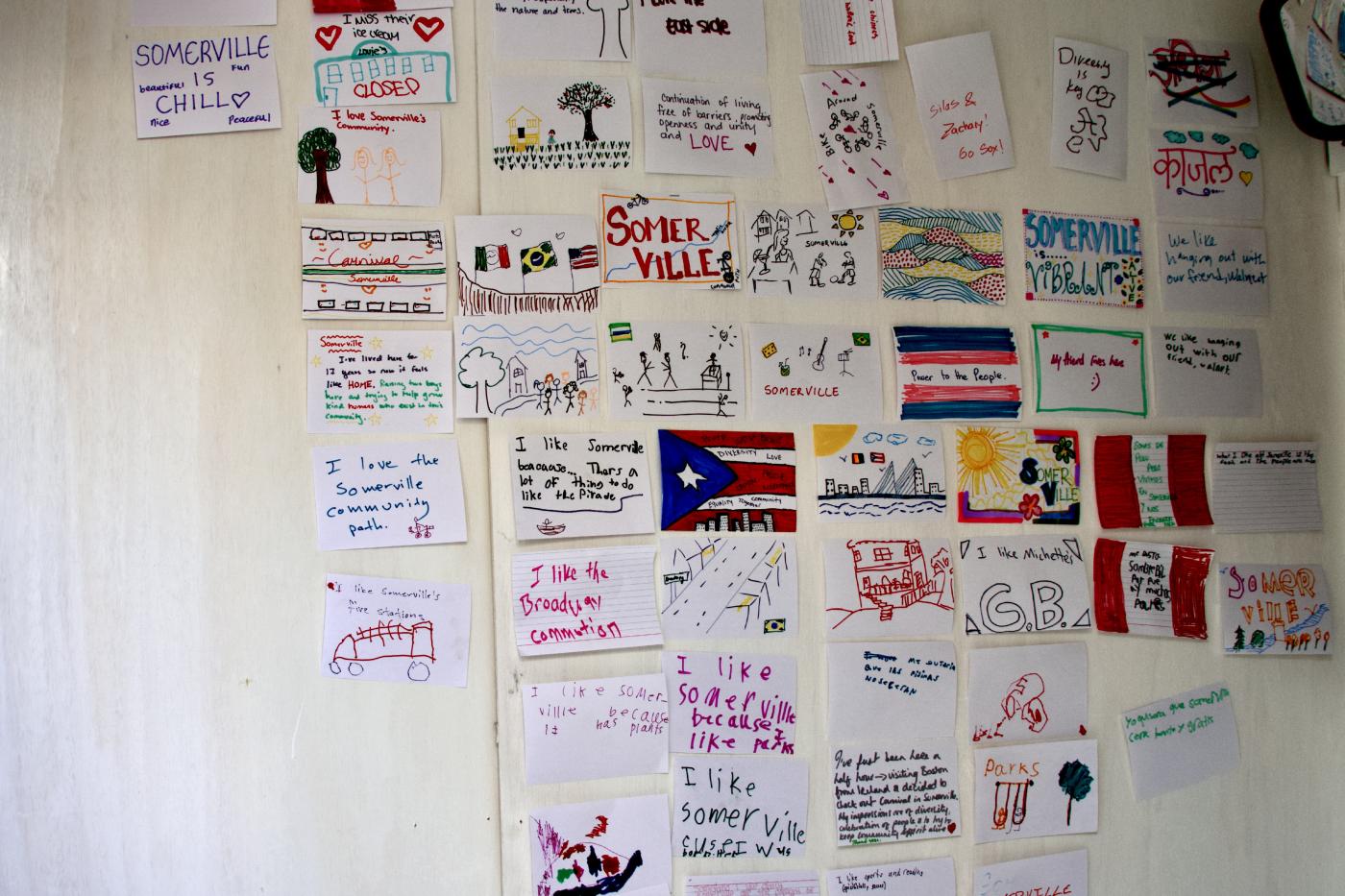
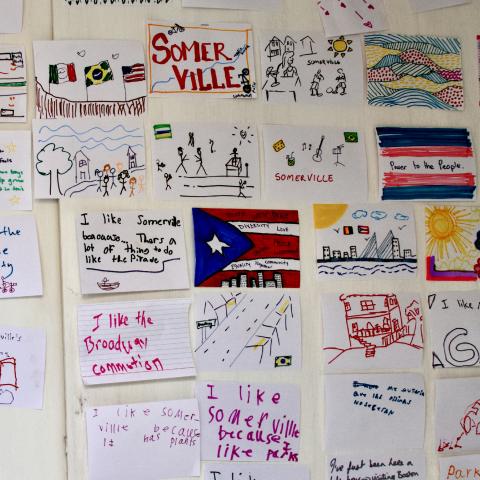
We called the project Faces of East. As the project evolved from conversation to participation to public art, it transformed individual reflections into a shared vision. Faces of East consisted of three parts. The first one took place during SomerStreets: Carnaval in June 2025. We created a wooden structure and invited people to go inside, see artwork and messages from their neighbors, and leave something of their own. We asked: what does East Somerville mean to you? What future do you imagine for it?
People combined symbols from their cultures and pieces of their lives in Somerville. There were messages from a woman who lived there for 17 years and finally felt home. There were Puerto Rican flags with "power, equality, diversity" written under them. There were messages in Spanish and Portuguese everywhere. One of the most memorable elements of the project was the mirror inside the structure. People who looked in it saw the following message: "you are the future of East." Realization of that brought excitement and recognition.
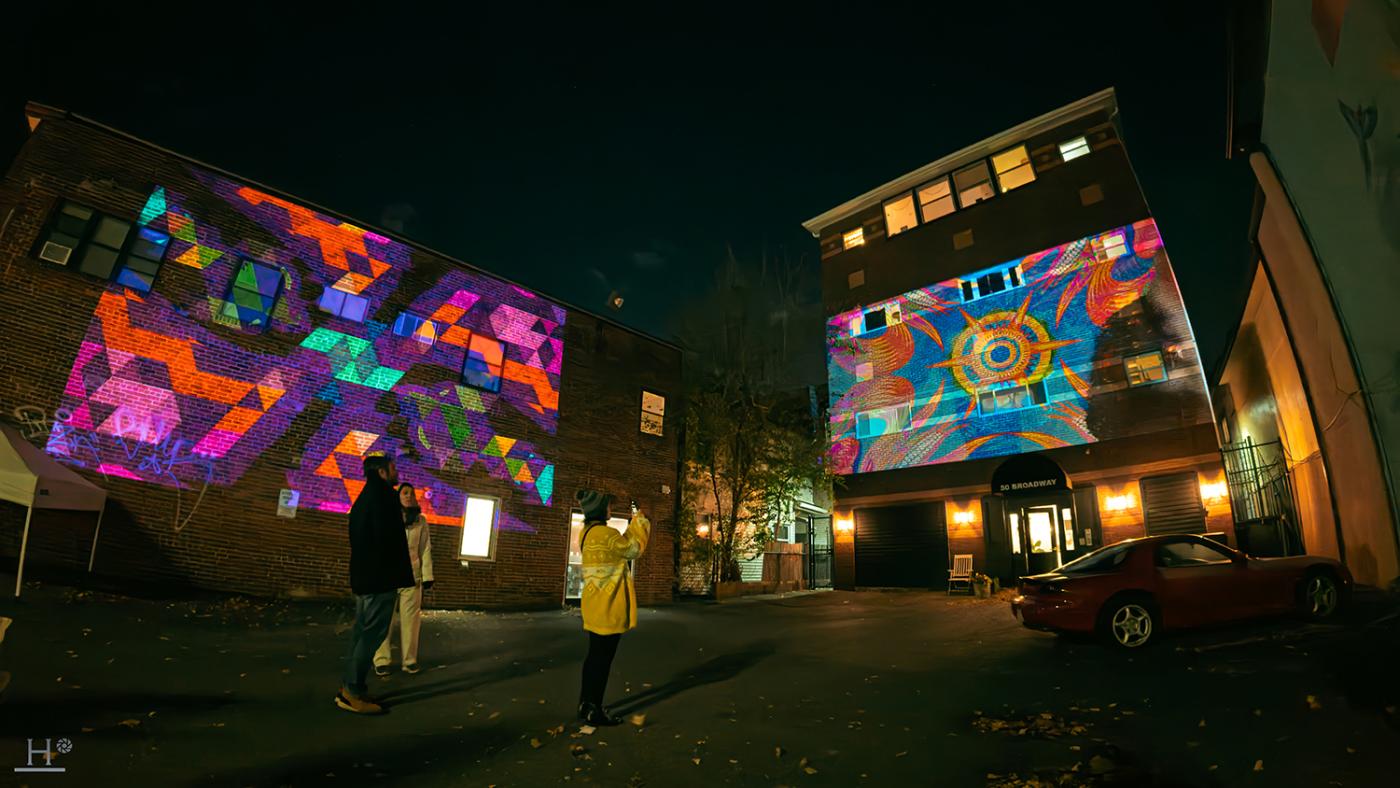
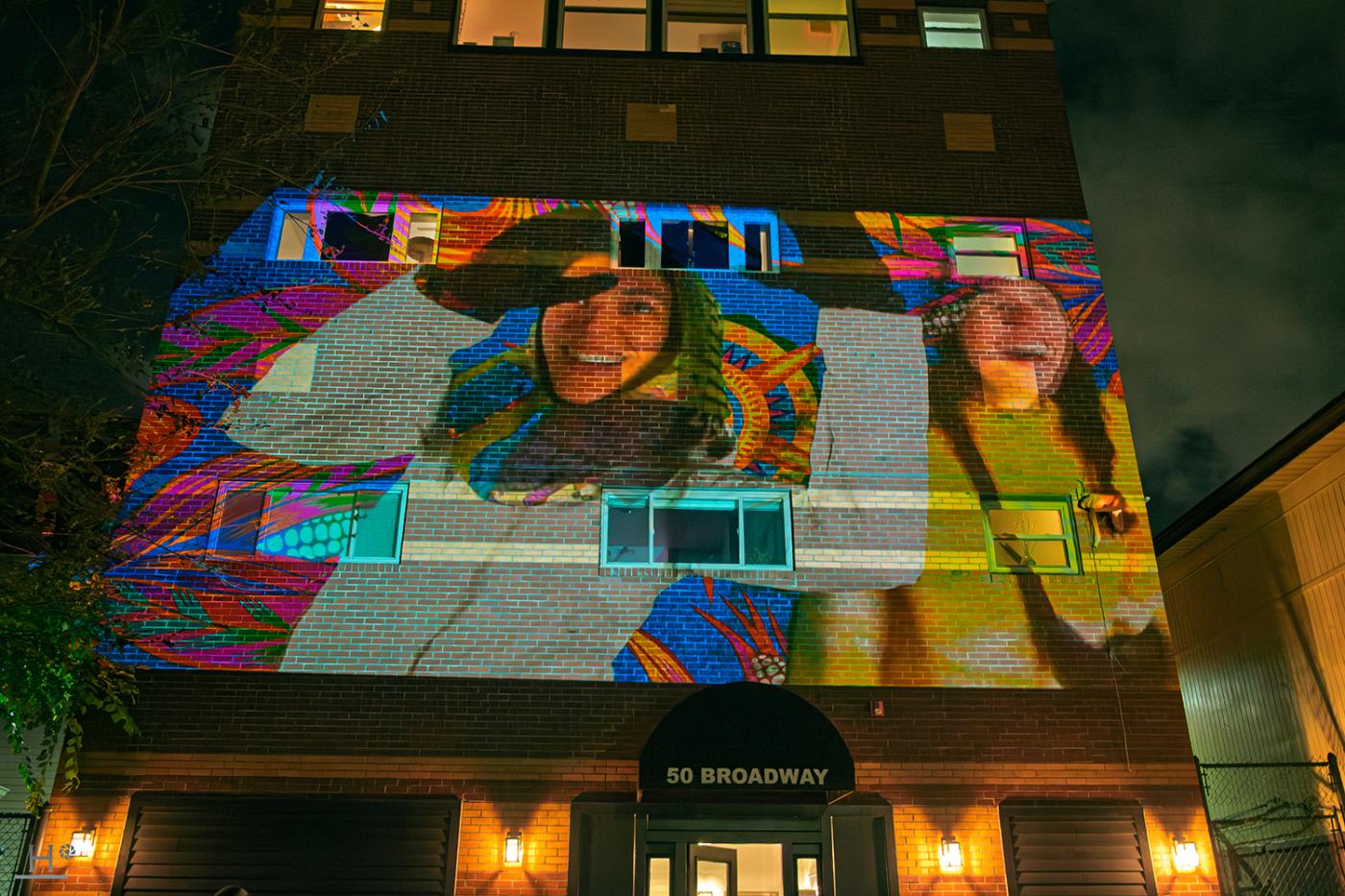
The second part of the project took place in November. A private parking lot became a temporary public art space. Using a camera and green screen, Andrés projected the residents into the artwork in real time. People who usually walked past that spot stopped, gathered, played, and watched themselves being turned into a part of the building facade. Frankly speaking, that day I realized the concept of space as a living thing, transformed by the way it is used by the residents. That night the parking lot became interactive art, a place for discussion and a dance floor. The building facade became a canvas painted with the faces of people who sometimes need a reminder of the importance of their presence.
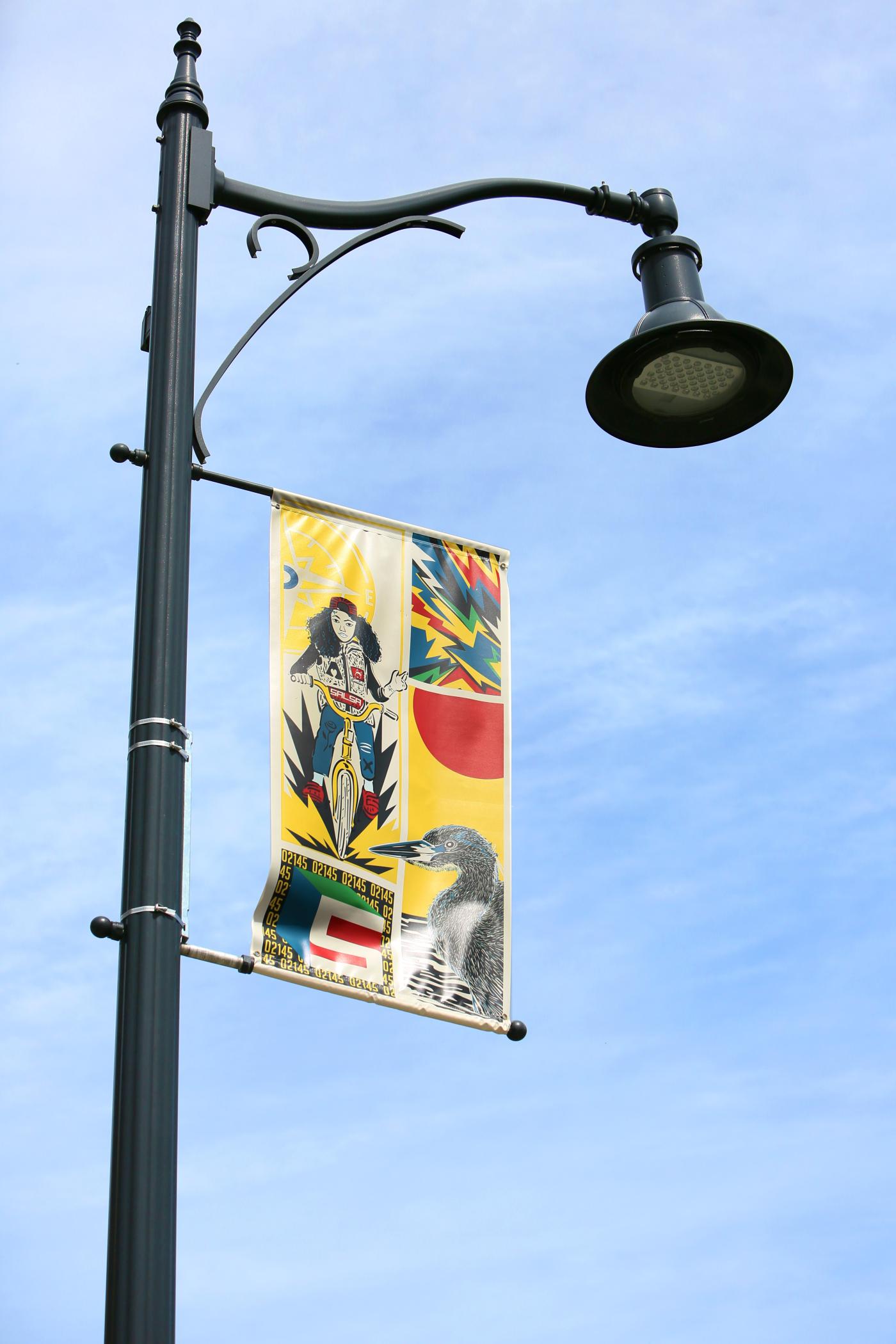
The third meeting of the project took place in Connexion in April 2026, where residents met interactive media based on the stories collected during the process. Then these stories went out to the street. Using drawings, conversations, memories, and ideas of residents, Andrés created banners installed along Broadway.
This project changed my understanding of public art. We learned that public art is not only about creating artwork, it is about creating spaces where people feel safe to participate, express themselves, and connect with one another. Due to political and social tensions during the project, we intentionally adapted our messaging, promotional materials, and outreach to ensure that the project remained welcoming and focused on dialogue rather than division. Art became a common language that allowed people to share their experiences without amplifying existing tensions.
Faces of East was not about putting artwork in the neighborhood and asking people to admire it. The community was not only the audience. The residents’ memories, faces, languages, drawings, and ideas became material for the work. The final installations celebrated East Somerville's diversity while reminding residents that they are not only part of the neighborhood's history, but also the people responsible for shaping its future. And the project went even further when, in partnership with Andrés and the Somerville Arts Council, those ideas helped inspire “Unity,” a new mural in the neighborhood.
For future PASJ applicants, my advice would be very simple: do not come with all the answers decided. Listen first. Give yourself enough space to allow the project to develop due to the people participating in it. Some of the memorable moments could not be planned. Faces of East reminded us that spatial justice does not always begin with changing a space, it begins with recognizing people within it.
Receive the latest news, grant offerings, and community events.